AI Summary
.jpg)
And if you searched for “communication breakdown” hoping to learn more about the Led Zeppelin song, we should probably clear something up now: you’re in the wrong place. Although, as far as workplace communication goes, the title is pretty accurate.
Let's paint the picture: Think about a typical shift change. A machine has been playing up, the outgoing team knows about it, and someone mentions it during the handover. But everyone is ready to head home, the conversation is rushed, and one important detail gets missed. The next shift starts work without quite having the full picture.
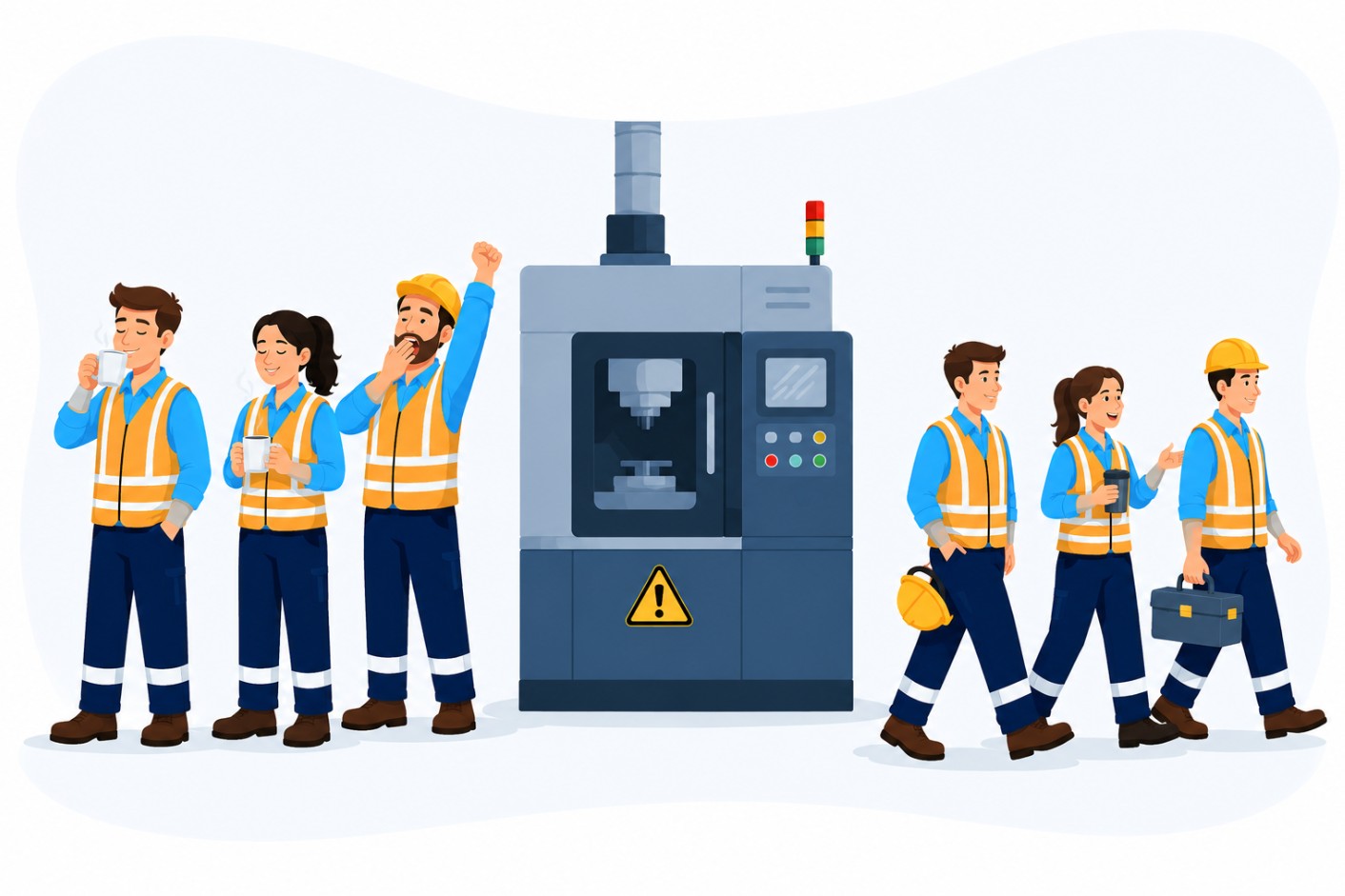
That’s a communication breakdown, and in a high-risk workplace it can quickly become much more than a communication problem.The tricky part is that communication breakdowns rarely happen because someone simply doesn’t care. People get tired, they rush, they get distracted, or they assume the other person already knows what they know. Add unclear responsibilities or an inconsistent handover process, and important safety information can easily fall through the cracks.
The good news is that communication breakdowns are often preventable. Once you understand why they happen and recognise the warning signs, you can start building better communication habits into everyday work.
What Is a Communication Breakdown in the Workplace?
A communication breakdown happens when a message is sent but isn’t properly received, understood or acted on.
In a workplace, that message could be about a machine fault, a new hazard, a change in conditions or an instruction for completing a task safely. Simply passing the information on isn’t enough. The person receiving it needs to understand what it means and what they need to do next.
Imagine a supervisor telling a team that their normal access route has changed because forklifts are operating nearby. The message has only worked if everyone affected knows about the change, understands which route to use instead and acts accordingly.
This is where safety communication can go wrong. We often assume that because something has been said, it has been understood. In practice, those are two very different things.
Communication Breakdown vs Poor Communication
Poor communication and communication breakdown are closely connected, but there is a useful difference.
Poor communication means information may be vague, inconsistent or incomplete. A communication breakdown happens when that problem leads to a failure in understanding, action or accountability.
The difference matters more when the stakes are high. An unclear meeting time might be annoying. An unclear instruction about equipment isolation, vehicle movement or a changing hazard could put someone in harm’s way.
Common Examples Across High-Risk Industries
Communication breakdown can look different depending on the workplace. In manufacturing, an outgoing shift might fail to clearly explain that a machine has been behaving unusually, leaving the next operator to assume everything is normal. On a construction site, a vehicle route might change during the day but the information doesn’t reach every contractor. In healthcare, an important patient update might be missed during a handover, leaving the next person to make decisions without information that someone else already had.
Different situations, same basic problem. One person knows something another person needs to know, and somewhere between sending the message and taking action, part of the information gets lost.
What Causes Communication Breakdown at Work?
Communication can break down for all sorts of reasons, and often several factors are at play at the same time. Some are human, such as being tired, distracted or under pressure. Others come from the workplace itself, from unclear responsibilities and inconsistent processes to language barriers or a culture where people hesitate to speak up. Understanding that mix is important because it shifts the focus from who made the mistake to why the information was lost or misunderstood. From there, it becomes much easier to see where things can be improved.
Human Error and State-Based Factors
We don’t communicate exactly the same way all day, every day. How well we listen, remember information and explain things can change depending on what’s happening around us and the state we’re in. The mental states we are in are particularly important particularly: rushing, fatigue, frustration and complacency. When you’re rushing, it’s easy to shorten an explanation because part of it seems obvious. The problem is that what’s obvious to you may not be obvious to the person taking over. Fatigue can make it harder to concentrate and remember details, while frustration can affect how patiently we listen or respond to questions. Complacency is harder to spot because it tends to develop around familiar tasks. Once we’ve done something hundreds of times, it becomes easier to assume we already know what is coming and stop paying full attention.
None of this means people are deliberately careless. It means our state can influence how we communicate, which is why recognising those moments is an important human error reduction skill. If you notice that you’re rushing, for example, that can become your cue to slow down for the important part of a handover and make sure the other person really has the information they need.
Structural and Organisational Barriers
Sometimes the process itself makes good communication harder than it needs to be.
Imagine production, maintenance and contractors all using different ways to share safety information. Each method may work within the individual team, but information can easily become fragmented when it needs to move between them.
Unclear responsibilities create a similar problem. If several people hear about a hazard but nobody is clearly responsible for acting on it, everyone may assume somebody else is dealing with it.
For critical safety communication, simple feedback loops can help. Instead of assuming a message has been understood, the person receiving it confirms the key information and what they will do next.
How to Spot the Warning Signs Early
You don’t have to wait for an accident to discover that communication isn’t working. Usually, there are smaller warning signs first. Think of the three wise monkeys: see no evil, hear no evil, speak no evil. They might not have been thinking about workplace safety, but they do a surprisingly good job of illustrating how communication problems develop.

Can’t see: Something is happening on the frontline, but nobody notices it or recognises that it needs to be communicated. A recurring machine fault becomes “just one of those things”, or a change in conditions is so familiar that people stop paying attention to it.
Can’t hear: The information is shared, but it doesn’t really land. Maybe someone is distracted, tired or rushing. Maybe the message gets buried in a long briefing. Technically, it was communicated. Practically, it went nowhere.
Can’t speak: Someone spots the problem but doesn’t say anything. They may assume somebody else already knows, feel uncomfortable questioning a supervisor, or simply think it isn’t important enough to mention.
That’s why phrases like “Nobody told me,” “I thought they knew,” and “I assumed someone else was handling it” are worth paying attention to. Rather than dismissing them as excuses, look at where the chain broke. Was the problem not seen, not heard or not spoken about?
How to Fix Communication Breakdown at Work: Practical Steps
Fixing communication breakdown doesn’t necessarily mean more meetings, emails or procedures. When people are already dealing with information overload, adding more communication can sometimes make things worse. The goal is to make critical communication clearer and then reinforce the behaviours that help people use it.
Standardise Critical Safety Communication
Some conversations are too important to leave entirely to chance. Shift handovers, pre-task discussions and changes to working conditions all benefit from a simple, consistent structure.
A handover might always cover equipment problems, changing conditions, outstanding maintenance and temporary controls. Closed-loop communication can then be used for particularly important instructions, with the person receiving the information confirming what they understood and what they will do next. It’s a small step, but it can catch a misunderstanding before it reaches the task.
Build Psychological Safety So Workers Speak Up
Good communication also depends on people feeling comfortable enough to say, “I’m not sure I understand.”
Imagine a worker stopping before a task because an instruction isn’t clear. A supervisor who responds with “Good catch, let’s check” reinforces the idea that asking questions is part of working safely. Over time, these everyday interactions matter. When workers know they can question an instruction or raise a concern without being blamed or dismissed, problems are more likely to surface early.
Making Safety Messages Stick Through Daily Habits
Most organisations already communicate about safety. The harder part is making sure those messages still influence behaviour weeks or months later. One-off training can introduce an idea, but knowing what you should do isn’t the same as remembering to do it when you’re tired, distracted or rushing.
This is where habit-building can help. Short, repeated opportunities to practise a behaviour keep it fresh and make it easier to use in real situations. Instead of expecting people to remember everything from an annual course, microlearning and regular nudges can bring important ideas back into everyday working life.
How YOUFactors Supports Clearer, Habit-Forming Safety Communication
YOUFactors is built around a simple idea: reducing human error takes more than knowing the rules. People need practical skills they can use when everyday factors such as rushing, frustration, fatigue or complacency start influencing what they do.
Rather than relying on one-off training, YOUFactors combines digital learning with short microlearning nudges that keep important ideas active over time. The aim is to help people practise useful behaviours until they become easier to use in real situations.
Tools such as Rate Your State encourage people to notice when their physical or mental state could increase the chance of an error. Error Anticipation helps them think ahead about situations where things could go wrong, while Close-Call Analysis encourages people to learn from situations that could have turned out differently. YOUFactors also provides private social sharing so colleagues can exchange experiences and learn from one another.
These tools aren’t communication checklists. Instead, they help develop the human error reduction skills that support better communication. Recognising that you’re rushing, for example, can become the cue to slow down during an important handover. Anticipating a difficult end-of-shift conversation can prompt you to think about how you’ll make sure the important information gets through. That repeated practice is what helps turn safety knowledge into everyday habits.
The Cost of Doing Nothing: Why Communication Breakdown Is a Safety Priority
A missed detail may seem minor when nothing happens as a result. But when poor communication contributes to an incident, the impact can include injury, downtime, investigations, damaged equipment and lost productivity. There are less visible effects too. Repeated communication issues can frustrate teams, create confusion over responsibilities and make it harder for people to trust the information they receive.
Prevention therefore isn’t only about avoiding incidents. Clearer communication can also help work run more smoothly because people understand the risks, know what is expected of them and have the confidence to speak up when something isn’t right.
Building a Culture Where Communication Never Breaks Down
No organisation can guarantee perfect communication. People are human, workplaces change and mistakes will still happen. What you can do is make those mistakes easier to catch. That means leaders modelling open communication, workers feeling comfortable asking questions and teams regularly practising the behaviours that help them manage human error. It also means moving beyond one-off training and reinforcing useful skills throughout the year.
YOUFactors supports that process by bringing learning, practice and nudges into everyday life. Over time, small behaviours such as recognising when you’re rushing, checking your state, confirming an instruction or sharing a close call can become part of how people naturally work.
Better Communication Starts With Better Habits
Communication breakdown is predictable because the conditions behind it are familiar. People rush, get tired, become frustrated and make assumptions. Processes aren’t always perfect either. The answer isn’t simply to tell people to communicate more. It’s to give them practical skills and then help those skills become habits they can rely on when things get busy.
That’s the thinking behind YOUFactors: helping people recognise the human factors that influence errors and practise safer responses until they become part of everyday life. Discover how YOUFactors can help your teams build practical human error reduction skills and turn safer behaviours into lasting habits.


.webp)
YOUFactors Team


.avif)