AI Summary

Safety professionals have always faced the same dilemma. The best way to prepare someone for a hazardous situation is through experience, but the last thing anyone wants is for that experience to involve a real incident.
That's why VR training solutions continue to attract attention. They give organisations a way to expose employees to realistic scenarios without exposing them to real danger. Whether it's working at height, responding to a fire or operating heavy equipment, virtual reality allows people to learn by doing rather than simply reading procedures or watching demonstrations.
It's a powerful approach, especially for high-risk industries where practical training can be difficult, expensive or unsafe to deliver. But like any training method, virtual reality has strengths, limitations and a role within a much bigger safety strategy. The real question isn't whether VR works. It's how organisations can turn those immersive learning experiences into safer decisions long after the headset comes off.
What are VR training solutions?
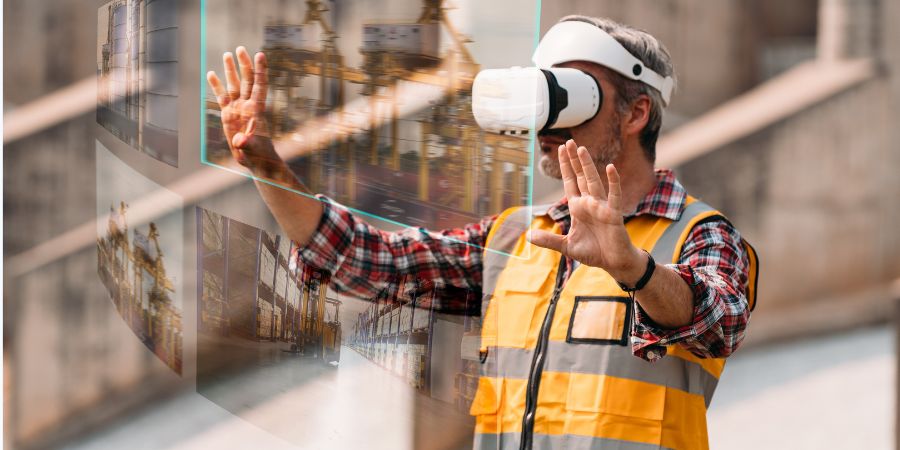
At their core, VR training solutions recreate workplace situations in a virtual environment, allowing employees to experience tasks that would otherwise be difficult, expensive or unsafe to practise.
Rather than reading procedures or watching someone else perform a task, learners actively take part in the experience. They make decisions, respond to changing conditions and see the consequences of their actions in real time. That level of interaction is one of VR's biggest strengths because people generally remember experiences better than presentations.
For safety professionals, this opens up opportunities that weren't always practical before. New employees can familiarise themselves with equipment before entering the workplace, while experienced workers can rehearse emergency procedures or uncommon situations that they might only encounter once in their career. As a result, VR training solutions can improve confidence before employees carry out the task for real.
Why organisations are investing in VR safety training solutions
The growing interest in VR safety training solutions isn't simply about adopting new technology. It's about solving long-standing training challenges.
Anyone responsible for health and safety knows how difficult practical training can be. Some activities require expensive equipment to be taken out of service, while others involve risks that simply can't be recreated safely. Virtual reality provides a practical alternative by allowing organisations to simulate those situations without disrupting operations or exposing employees to unnecessary danger.
That flexibility is particularly valuable for larger organisations where consistency matters. Every employee can complete the same scenarios, receive the same feedback and develop the same baseline understanding, regardless of where they work. It also allows learners to repeat exercises until they're comfortable, something that's often difficult during live practical training.
Where VR health and safety training delivers the greatest value
Like every training method, VR health and safety training has situations where it delivers exceptional results. It's particularly useful when workers need to understand unfamiliar environments or prepare for high-risk activities before carrying them out. Emergency response, confined spaces, hazardous chemical handling and complex manufacturing processes all lend themselves well to immersive learning because they allow employees to experience situations that would otherwise be impossible, or unwise, to recreate.
Construction and energy companies have also embraced virtual reality because it allows new starters to become familiar with sites and procedures before arriving on location. That preparation often reduces anxiety and improves confidence, especially when employees are entering environments that can feel overwhelming at first. The key point, however, is that VR prepares people for the work. It doesn't replace the experience they gain once they're back in the real world.
Why VR construction safety training continues to grow
Construction is one of the industries where virtual reality makes the most sense. Every project is different, hazards change daily and many activities involve significant risk, which makes realistic practical training difficult to deliver.
.jpg)
With VR construction safety training, workers can experience working at height, moving around busy sites or identifying hazards before they ever step onto the project. Instead of relying entirely on classroom presentations or toolbox talks, organisations can place employees inside realistic situations where they actively make decisions. That creates a more engaging learning experience, but it also highlights something important. Construction sites rarely unfold exactly as planned. Schedules change, weather changes and unexpected problems appear throughout the day. Those operational realities influence behaviour just as much as the original training, which means learning has to continue after induction.
Are there free VR safety training solutions?
It's common for organisations researching VR safety training solutions free to discover demonstrations, trial versions or sample scenarios. These are useful for understanding what virtual reality can offer and whether employees respond well to the technology. Fully developed commercial programmes, however, are rarely free. Creating realistic simulations takes specialist expertise, while keeping content aligned with changing equipment, procedures and regulations requires ongoing investment.
The missing piece isn't the technology
One thing virtual reality can't simulate perfectly is the reality of an ordinary workday. Training sessions, whether they're classroom-based, practical or delivered through VR, usually take place in controlled conditions. People are focused, they know they're learning and they're paying attention to the task in front of them. Real work is different. Priorities shift, interruptions happen and production pressures compete for people's attention. Those are the conditions where even experienced workers can make mistakes, not because they don't know what to do, but because they're human.
This isn't a criticism of virtual reality. In fact, it's true of every form of training. Learning a task and performing that task consistently over weeks, months or years are two very different challenges.
Why experience isn't always enough
One of the reasons VR is so effective is that it gives people experience before they encounter the real situation. That's incredibly valuable, especially for complex or hazardous work where learning through trial and error simply isn't an option. But if experience alone prevented incidents, experienced workers would never get injured.
Anyone who's investigated workplace incidents knows that's not the case. Quite often the people involved are highly competent. They've completed the training, understand the risks and have carried out the task many times before. What changes is rarely their knowledge. More often it's their attention, their workload or their state of mind.
The next challenge for safety leaders
As organisations continue investing in immersive technologies, the conversation is beginning to shift from How do we improve training? to How do we make sure that learning sticks?
That's an important distinction because knowledge naturally fades over time. Habits take over, routines become familiar and everyday pressures return. The organisations seeing the greatest improvements in safety aren't just delivering better training. They're finding ways to keep safety thinking alive long after the formal learning has finished. Whether that's through coaching, regular conversations, microlearning, peer observations or other forms of reinforcement matters less than the principle itself. Learning shouldn't end when the course finishes.
Final thoughts
There's little doubt that VR training solutions will continue to play an increasingly important role in workplace safety. They make learning more engaging, reduce the risks associated with practical training and give people valuable experience before they enter hazardous environments.
But perhaps the biggest opportunity isn't making training more realistic. It's making the learning last. Technology can help people prepare for the job. The next challenge for safety professionals is helping people apply that learning consistently, especially on ordinary days when deadlines, distractions and complacency begin to creep in. That's where the future of workplace safety may become even more interesting.


.webp)
YOUFactors Team


.avif)