Situational awareness is the ability to notice what is happening around you, understand what it means and anticipate what could happen next. At work, this means recognising changing conditions and potential risks early enough to make safer decisions.
This skill is especially important in high-risk workplaces, where people, equipment and conditions can change quickly. Procedures, risk assessments and engineering controls remain essential, but they cannot predict every situation. Strong workplace situational awareness helps people respond to what is actually happening in the moment.
One of the most widely recognised explanations of situational awareness comes from researcher Mica Endsley. Her model describes three levels: perception, comprehension and projection.
In practical terms, this means noticing what is happening, understanding why it matters and considering what is likely to happen next. These three processes work together and help people build an accurate picture of their surroundings.
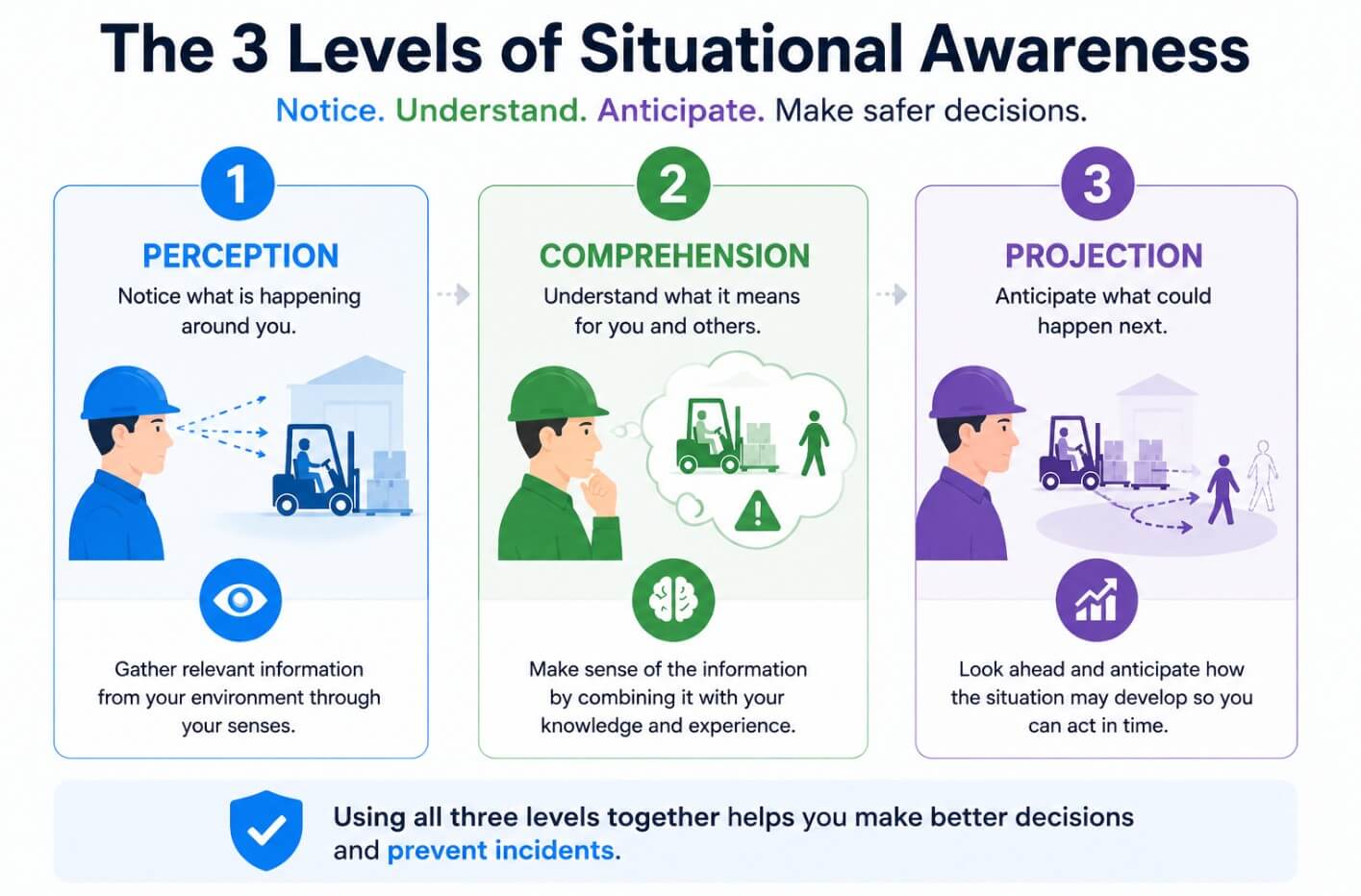
Perception is the first level of situational awareness. It involves noticing relevant information, such as a change in equipment movement, an unsafe behaviour, a spill or an unusual condition.
For example, a warehouse employee might notice a forklift approaching a shared pedestrian route. A machine operator may hear that equipment sounds different from normal. In both situations, the worker has identified a change that could affect safety. Good perception does not mean trying to monitor everything at once. It means noticing the information that matters for the task and recognising when conditions have changed.
Once something has been noticed, the next step is understanding its significance. A worker who sees a forklift approaching, for example, needs to consider whether the driver has seen them, whether their paths could cross and whether they need to change position.
Experience can make this process quicker because workers learn to recognise familiar patterns. However, familiarity can also create a challenge. When someone has completed the same task hundreds of times, they may give it less conscious attention, which can make subtle changes easier to miss.
Projection involves using what you know about the current situation to anticipate how it may develop. If the worker sees the forklift and understands that their paths could cross, they can anticipate where both will be a few seconds later and act before a dangerous situation develops.
This ability to look ahead is an important part of situational awareness safety. Many incidents develop through a sequence of events rather than one isolated action, so recognising where that sequence may lead gives workers more time to respond.
Situational awareness has strong roots in aviation and military operations, where people need to understand complex environments that can change rapidly. Endsley's model helped formalise the concept by explaining how people perceive information, understand its meaning and anticipate future conditions.
The same principle applies naturally to workplace safety. Employees in manufacturing, construction, logistics and other high-risk industries constantly process information about equipment, people and their surroundings. The objective is not to maintain constant hypervigilance, but to recognise the information that matters when risk changes.
Risk assessments, procedures, engineering controls and PPE are fundamental parts of workplace safety, but work does not always happen under perfectly predictable conditions. Equipment moves, people enter work areas, workloads increase and employees can become tired, rushed or distracted. Situational awareness helps workers manage this variability because it encourages them to update their understanding of the situation as conditions change.
Consider a maintenance task that has been properly planned and risk assessed. Another contractor could enter the area, the job could take longer than expected or the worker could become fatigued. The original controls remain important, but the people involved also need to recognise how these changes affect the risk.
A workplace incident does not always begin with someone deliberately choosing an unsafe action. Often, several factors combine until an error becomes more likely.
When someone is rushing, for example, their attention may narrow as they focus on completing the task quickly. Under those conditions, a change in the environment can be easier to miss, especially when the work is familiar. If that change puts the worker closer to hazardous energy or into a line of fire, the time available to recognise the danger may become very short.
Situational awareness helps interrupt this process by encouraging people to recognise both changing conditions and the human factors that can affect their attention.
Situational awareness matters in any workplace, but it becomes particularly important where people interact with hazardous energy, moving vehicles or equipment, or rapidly changing conditions. This includes industries such as manufacturing, construction, logistics, transport, utilities, mining, oil and gas, aviation and maintenance.
In these environments, even a small change in position, timing or attention can significantly change the level of risk.
Poor situational awareness is sometimes described simply as "not paying attention," but that explanation overlooks why attention changes in the first place.
Fatigue can make it harder to maintain concentration and process changing information, while rushing and frustration can narrow attention towards the immediate objective. Distraction creates competing demands for attention, which means important information may be missed even when a worker knows the hazard exists.
Complacency presents a different challenge because it often develops through familiarity. As people become experienced with a task, some actions become more automatic. This helps people work efficiently, but it can also mean that familiar situations receive less conscious attention. If something changes, the worker may not recognise it as quickly.
.jpg)
These factors are important because they show why improving situational awareness requires more than reminding employees to "be careful." Workers need practical ways to recognise when their own state or surroundings are changing.
Good decisions depend on having an accurate understanding of the situation. If a worker does not notice that conditions have changed, they may make a reasonable decision based on information that is no longer accurate.
Strong situational awareness helps people identify those changes earlier, understand how they affect risk and adjust what they are doing. This can be particularly valuable around vehicles, moving equipment, hazardous energy and line-of-fire exposures, where a few seconds of additional warning can make a significant difference.
The benefits can also extend beyond safety. The same awareness skills may help employees identify equipment problems, quality issues or potential operational errors before they develop into larger problems.
Effective situational awareness training should focus on skills that employees can practise during real work rather than simply telling people to pay more attention.
One useful approach is to encourage workers to identify what has changed before starting a task. Equipment, staffing, weather, workload or surrounding activities may be different from the last time the work was performed, even when the task itself is familiar. Workers can also learn to anticipate errors by considering what could cause them to make a mistake. If they know they are rushing to meet a deadline or feeling fatigued late in a shift, they can recognise that their risk has changed and take steps to refocus.
Close calls offer another valuable learning opportunity. Discussing what happened, what changed and what could have made the outcome worse helps teams recognise similar patterns in the future. Over time, this repeated practice can strengthen situational awareness and make safer responses easier to apply.
Formal training can introduce situational awareness, but the skill needs reinforcement if it is going to influence everyday behaviour. This is where short, repeated learning activities can help employees continue practising between training sessions.
YOUFactors combines digital learning, microlearning and digital nudges with practical human error reduction tools. Error Anticipation encourages users to think ahead about situations that could increase the likelihood of a mistake, while Rate Your State helps them consider whether rushing, frustration, fatigue or complacency may be affecting them.
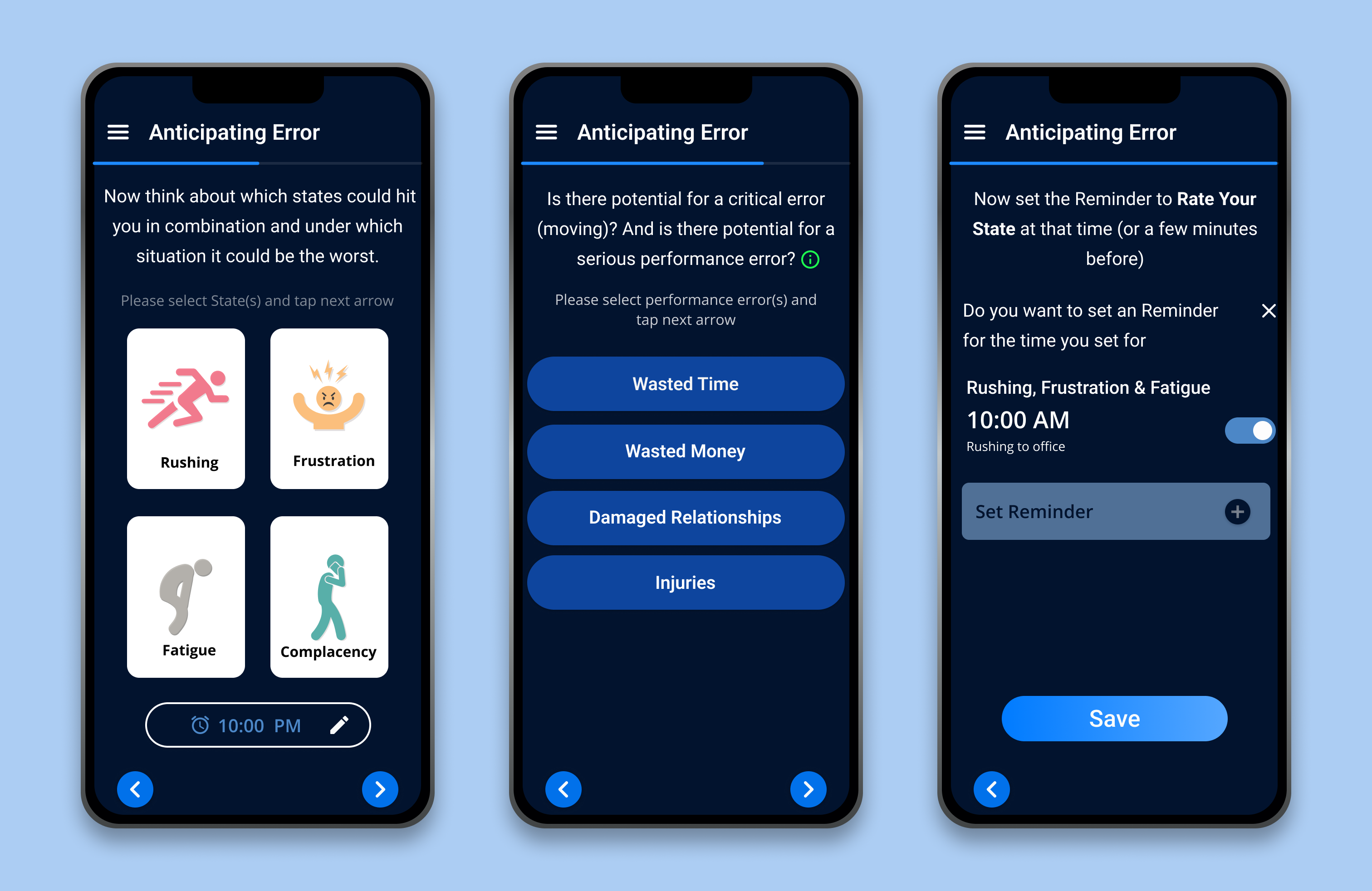
Rather than treating situational awareness as something employees learn once, this approach supports repeated practice. Over time, the aim is to make recognising these patterns and responding to them a more natural part of everyday work.
For HSE and HR managers, improving situational awareness starts with understanding where awareness is most likely to break down. Near misses, frontline conversations and observations can reveal where tasks have become highly routine, where attention is stretched and where factors such as rushing or fatigue regularly appear. From there, organisations can combine existing risk controls with practical situational awareness training that employees can apply during everyday work. The objective is not to create another safety rule. It is to help people become better at recognising when conditions are changing, understanding what that means for risk and acting before an error develops into an incident.
Situational awareness means noticing what is happening around you, understanding what it means and anticipating what could happen next.
The three levels in Endsley's model are perception, comprehension and projection. In simple terms, this means noticing relevant information, understanding its significance and anticipating how the situation may develop.
Fatigue, rushing, frustration, complacency, distraction and information overload can all affect situational awareness because they can influence what people notice and how they process information.
Yes. Situational awareness can be developed through training and repeated practice, including anticipating errors, recognising changes in personal state, discussing close calls and paying attention to changes in work conditions.
Not exactly. Hazard awareness focuses on recognising potential sources of harm. Situational awareness is broader because it also involves understanding how current conditions affect risk and anticipating how the situation could develop.
.webp)
Learn, practice, and build safer habits in minutes with YOUFactors.
 See How it Works ▶️
.avif)