An unsafe condition is a situation in the workplace that could cause injury, illness or other harm. An unguarded machine, damaged cable or slippery floor are familiar examples. Some hazards are obvious, but others become so routine that people stop noticing them.
Unsafe conditions don't always result in accidents straight away. A spill might remain on a walkway for hours without anyone slipping, yet the risk persists until someone controls it. Recognising and reporting these conditions early is essential to preventing workplace accidents.
An unsafe condition is a hazardous feature of the working environment, equipment or work system that exposes people to potential harm. A workplace hazard is any source of potential harm, while an unsafe condition describes a situation in which a hazard is present and can expose workers to danger.
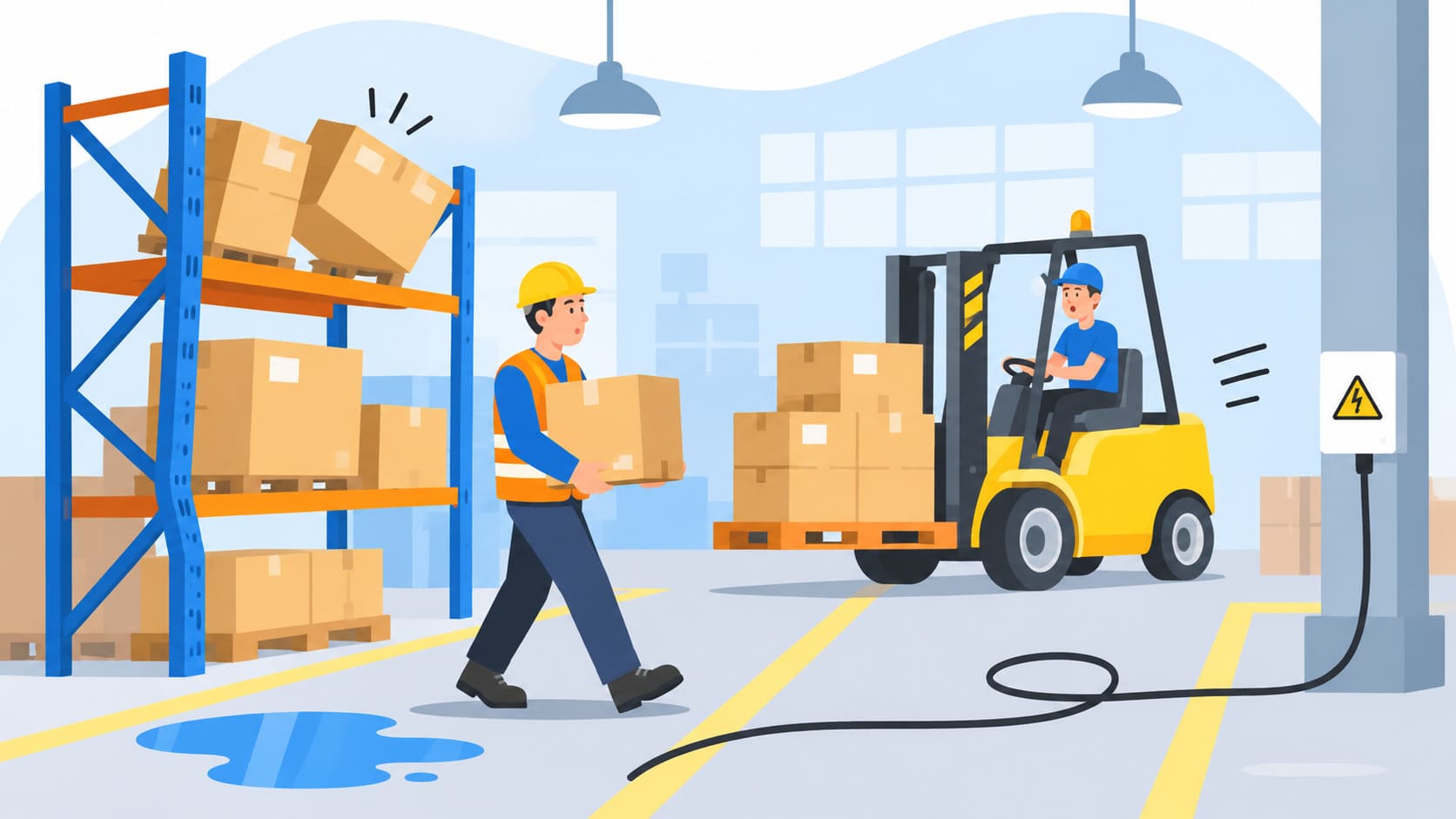
Mexico's NOM-030-STPS-2009 requires employers to identify dangerous or unsafe physical conditions when assessing occupational health and safety. This includes risks related to buildings, processes, machinery, equipment, materials and energy. The underlying principle is simple: a workplace can be unsafe even when nobody is visibly doing anything wrong.
Unsafe conditions can occur in almost every industry, although the possible consequences depend on the task and existing controls.
Some of these conditions can be found during inspections, while others require attention to unusual changes in a familiar environment.
An unsafe condition relates to the environment, equipment or working arrangements. An unsafe act refers to an action or omission that increases exposure to danger. Both concepts help explain incidents, but they require different responses.
Consider a worker who slips on a wet warehouse floor. The spill is an unsafe condition because it creates a slipping hazard. If someone knowingly ignores a clearly marked exclusion area and walks through it, that action may be described as unsafe. The two situations can contribute to the same incident, but the prevention measures are different.
When organisations focus only on what a worker did, they can miss the conditions that made the incident possible. An operator may bypass a machine guard because the machine repeatedly jams and the approved clearing procedure is difficult to follow. Simply telling the operator to be careful does not resolve the equipment problem.
Understanding the common causes of workplace accidents means examining both the work environment and the factors influencing people's actions, rather than assuming one person is solely responsible.
Unsafe conditions can result from physical defects, environmental changes or the way work is organised. Problems can develop gradually through poor maintenance or emerge suddenly after a technical failure.
Common physical causes include:
These conditions can develop over time, which makes regular inspections and preventive maintenance essential.
Unsafe conditions also develop when maintenance is delayed, instructions are unclear, training is insufficient or information is not passed between shifts. Poor planning can leave workers without the equipment or time needed to complete tasks safely.
A weak health and safety culture can make these problems more serious. If reports are routinely ignored or employees fear negative reactions, hazards may go unreported. Regular inspections must therefore be supported by clear responsibilities and visible corrective action.
Recognising unsafe conditions is part of hazard recognition. A simple observation routine can help workers identify emerging risks before an incident occurs.
For more complex operations, a formal Job Hazard Analysis (JHA) helps teams review each stage of a job and identify suitable controls. As a daily mental checklist, ask: What's changed? What could go wrong? What should I do?
Even experienced workers do not see every hazard. Our attention and judgement change depending on workload, experience and how we feel. A condition may remain visible for weeks without being reported because people have become used to it.

Risk perception affects how people judge the likelihood and seriousness of harm. Repeated exposure without an incident can make an unsafe condition seem normal. Fatigue can reduce alertness, while overconfidence may lead experienced workers to underestimate familiar risks. Distractions and time pressure can also draw attention away from important changes.
The SafeStart methodology identifies four states that can increase the likelihood of critical errors: rushing, frustration, fatigue and complacency. Recognising these states helps workers understand when they may need to refocus and look more carefully at their surroundings. Human factors awareness complements engineering controls and safe procedures rather than replacing them.
Recognising hazards can become more consistent through repeated practice. Behaviour-based safety methods can help people reflect on their actions and notice situations that increase exposure to danger.
The YOUFactors app, used by more than 50,000 workers, reinforces SafeStart techniques through digital learning, Safety Missions and Daily Challenges. XP and gamification features encourage participation over time, while Rate Your State helps workers consider whether rushing, frustration, fatigue or complacency could affect their attention.
These activities support everyday awareness. They do not replace inspections, protective equipment, incident reporting systems or an employer's responsibility to control workplace hazards.
Recognising a problem is only the first step. The condition must be assessed, controlled and followed up so that employees are not left exposed to the same hazard.
A simple assessment considers the likelihood of harm and the severity of its possible consequences. The examples below are illustrative; actual ratings depend on exposure, existing controls and the organisation's risk assessment method.
Where practical, eliminate the hazard. Otherwise, prioritise effective engineering and other controls before relying on procedures or personal protective equipment alone.
Unsafe conditions can exist long before anyone gets hurt. That is why inspections, preventive maintenance and clear reporting procedures remain essential. Workers also benefit from regular opportunities to practise recognising changes and understanding when their own attention may be affected.
Discover how YOUFactors helps workers strengthen risk awareness and build safer habits with short, engaging digital learning activities.

Learn, practice, and build safer habits in minutes with YOUFactors.
 See How it Works ▶️