AI Summary
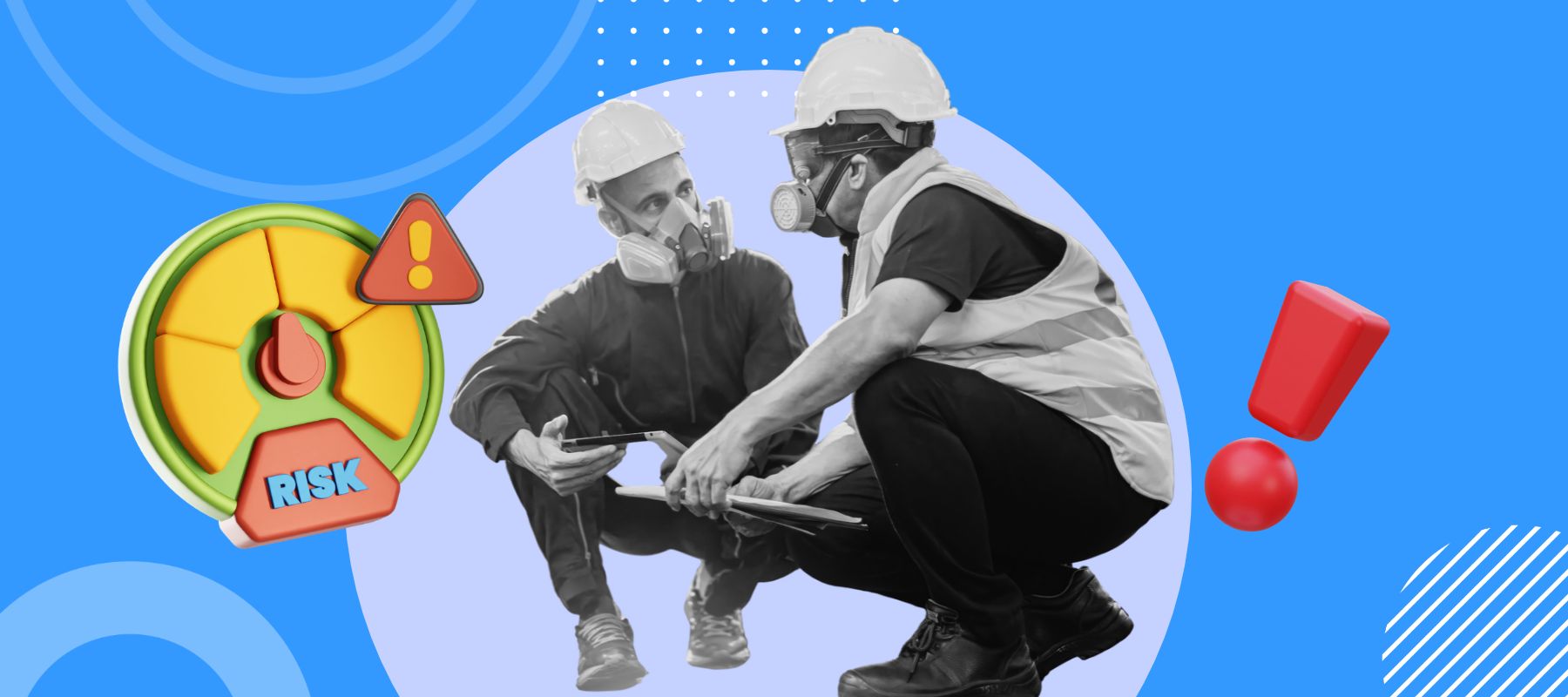
Research suggests that human error is involved in 80–90% of workplace accidents. Risk perception helps explain why experienced workers sometimes underestimate familiar hazards. It is the subjective judgement of how likely harm is and how severe the consequences might be.
What is risk perception and why does it differ between people?
Personal experience, emotions and context influence risk perception. Two workers can assess the same situation differently because one has witnessed an accident and another has performed the task repeatedly without an incident.
The gap between perceived risk and actual risk
Familiar hazards may seem less threatening over time, even though their potential consequences have not changed. Conversely, unfamiliar work can appear more dangerous, even when suitable controls are in place.
Why individual experience skews risk judgement
Experience can improve hazard recognition, but repeated success can also encourage overconfidence. Workers should not interpret the absence of previous accidents as proof that a task is safe.
The key psychological factors that distort how we assess danger
Complacency and the familiarity trap
A forklift operator who uses the same route every day may stop consciously checking a familiar pedestrian crossing. Routine can reduce attention even when hazards remain.

Fatigue, stress and their impact on hazard awareness
Fatigue can reduce concentration, slow responses and impair decisions. Stress and workload can also compete for attention. The effects extend beyond immediate safety risks, as shown by statistics on working days lost to stress. Organisations need adequate staffing, rest and task design alongside training.
Optimism bias: 'It won't happen to me'
Optimism bias can lead workers to believe that accidents happen to other people. Normalcy bias can also make unexpected warning signs easier to dismiss. These biases influence judgement even when people understand the hazards.
Environmental and organisational factors that shape risk perception at work
Risk perception depends on the job and the organisation as well as the individual. Signage, equipment, leadership and working conditions influence what workers notice and the precautions they consider necessary.
How safety culture influences individual risk judgement
When supervisors model safe practices and respond to concerns, workers learn that hazards deserve attention. When shortcuts are routinely accepted, unsafe practices can begin to feel normal.
The role of time pressure and production demands
Rushing can narrow attention to completing the task rather than assessing changing conditions. Organisations should examine realistic schedules, production expectations and the authority to stop unsafe work.
Why traditional safety training does not always improve risk perception
Knowledge matters, but knowing a rule does not guarantee that it will be applied during interruptions, fatigue or pressure. One-off training is most effective when supported by regular reinforcement, practical application and robust safety controls. The UK Health and Safety Executive explains why training alone cannot eliminate slips and lapses.
How habit formation and behavioural science can improve risk perception
Habits develop when behaviours are repeated in consistent situations. Research by Phillippa Lally and colleagues helps explain how actions can become more automatic through practice. In workplace safety, the objective is to make useful checks familiar without replacing formal assessments or engineering controls.
Building automatic safety reflexes through daily repetition
Studies of how long it takes to form a habit highlight the value of consistent repetition and the considerable variation between people. Short safety exercises, scenario questions and reflection can help workers connect learning to real tasks.
The YOUFactors app uses Daily Challenges, Safety Missions and timely nudges to reinforce human factors awareness. Mobile activities make ongoing learning accessible to frontline workers across different shifts and sites.
The SafeStart methodology: a science-backed framework for risk awareness
YOUFactors builds on the SafeStart methodology, which identifies four states that can contribute to critical errors: rushing, frustration, fatigue and complacency. Recognising these states helps people notice when they need to pause and refocus.
SafeStart also identifies four critical errors: eyes not on task, mind not on task, line of fire, and balance, traction or grip. Workers learn to connect these errors with their attention and immediate working conditions.
Practical steps organisations can take to improve risk perception across their teams
1. Make risk awareness a regular conversation
Use toolbox talks, pre-task discussions and peer conversations to consider what has changed. Job Hazard Analysis (JHA) can help teams examine hazards before work starts.
2. Reinforce learning through short, frequent activities
Use realistic scenarios and brief learning activities between formal training sessions. Encourage workers to reflect on situations where attention or judgement changed.
3. Make safety learning accessible to frontline workers
Mobile-first learning can reach employees who rarely work at a desk, including distributed teams and workers on different shifts.
4. Measure safety behaviours, not only incident rates
Review the quality of hazard reports, safety conversations and pre-task checks. Understanding near misses and serious accidents supports proactive investigation before harm occurs.
5. Address the conditions that influence risk perception
Manage fatigue, workload, equipment and procedures, and make it practical for workers to raise concerns or stop unsafe work.
Make risk awareness part of everyday work
Risk perception changes with experience, mental state and working conditions. Regular reinforcement can support better awareness while organisations continue addressing the hazards themselves.
YOUFactors helps organisations reinforce safer habits through short, gamified learning activities grounded in SafeStart. Available on iOS and Android, it supports frontline and distributed teams. Discover YOUFactors.


YOUFactors Team